
Peptide Shelf Life Explained: How Long Do Peptides Last?
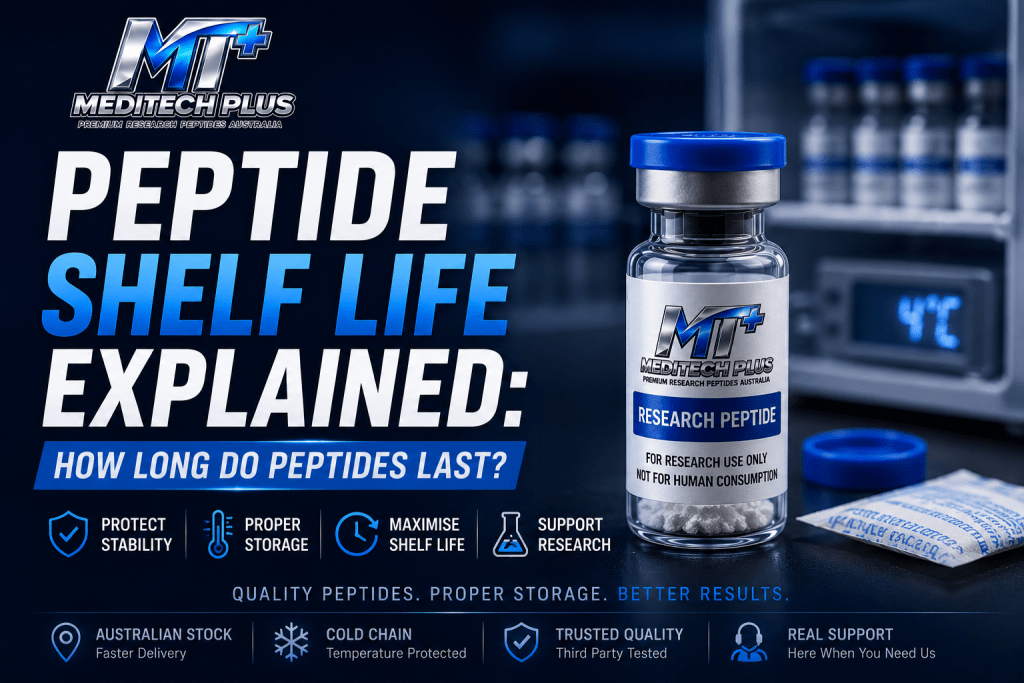
One of the most common questions in peptide research is simple: How long do peptides actually last? The answer depends on several important factors including storage conditions, whether the peptide is still lyophilised or already reconstituted, temperature exposure, handling practices, and overall stability of the compound. Many people assume peptides either last forever or go […]
Complete Guide to Bacteriostatic Water for Peptides
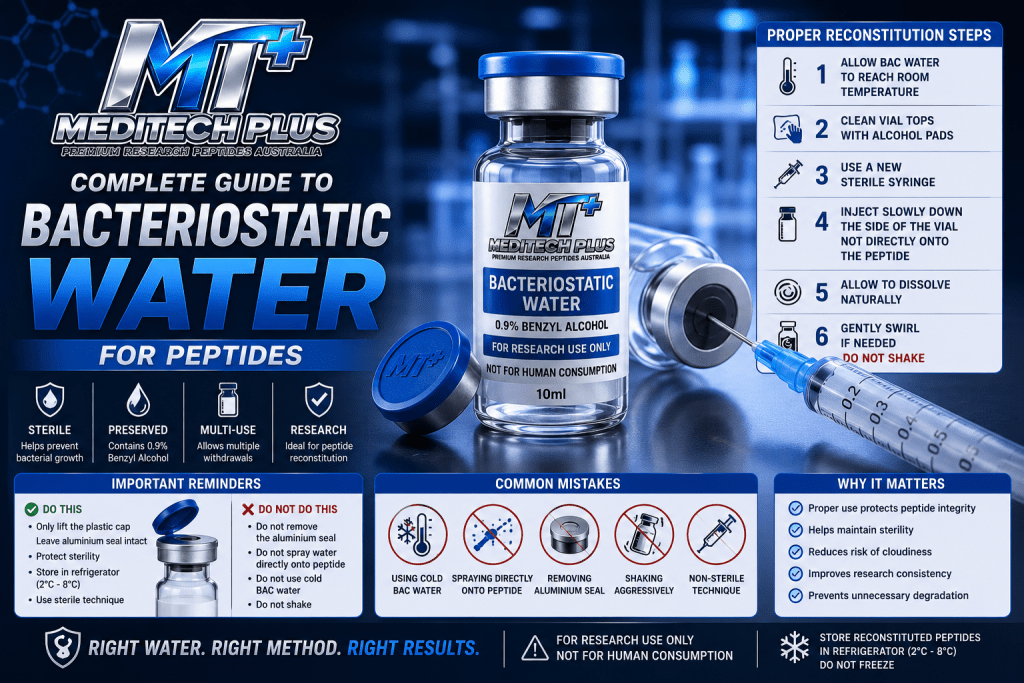
Understanding how to properly use bacteriostatic water protects peptide stability, improves consistency, and helps prevent unnecessary problems during research preparation. This guide explains what bacteriostatic water is, why it matters, how to use it correctly, and the most common mistakes people make. What Is Bacteriostatic Water? Bacteriostatic water is sterile water that contains a small […]
How to Spot High Quality Research Peptides vs Low Quality Suppliers
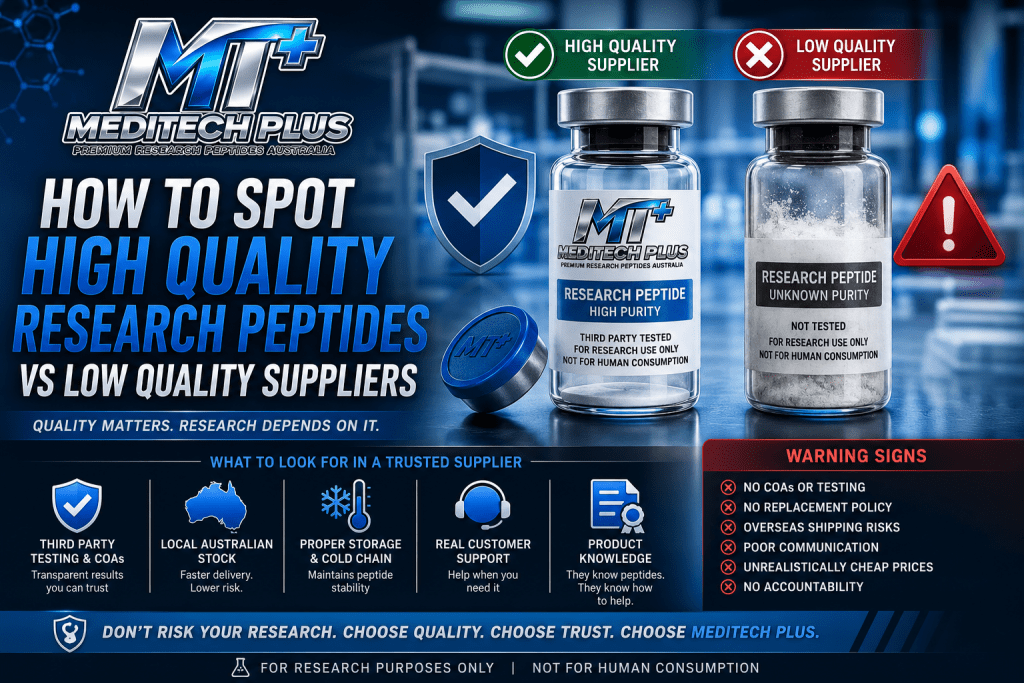
The peptide industry has grown rapidly across Australia, but with that growth comes a major problem — not all suppliers operate to the same standard. Many buyers focus only on price, only to discover later that poor handling, weak customer service, unstable compounds, or unreliable suppliers create far bigger problems than saving a few dollars […]
🧬 Peptide Storage, Preparation & Handling Guide
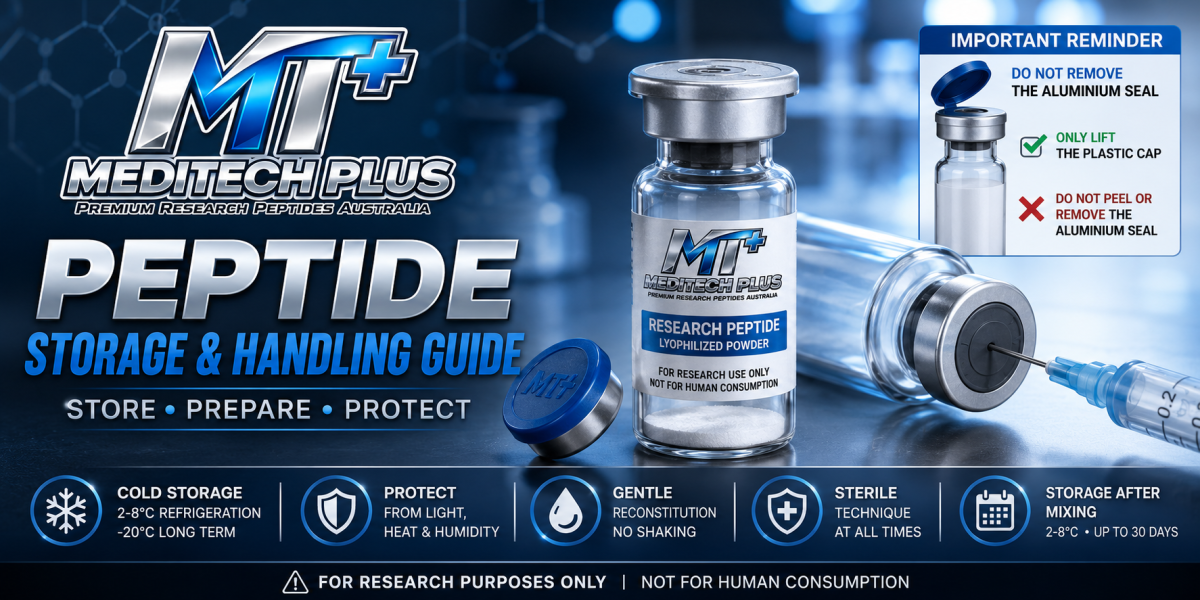
How To Properly Store, Prepare and Protect Research Peptides Peptides are extremely delicate research compounds. Their stability and molecular integrity can be affected by temperature changes, light exposure, improper mixing, contamination, poor handling, or incorrect storage. If peptides are not handled correctly, they can degrade quickly, become unstable, turn cloudy, lose structural integrity, and reduce […]