
Why Peptides Turn Cloudy After Mixing (And What It Means)
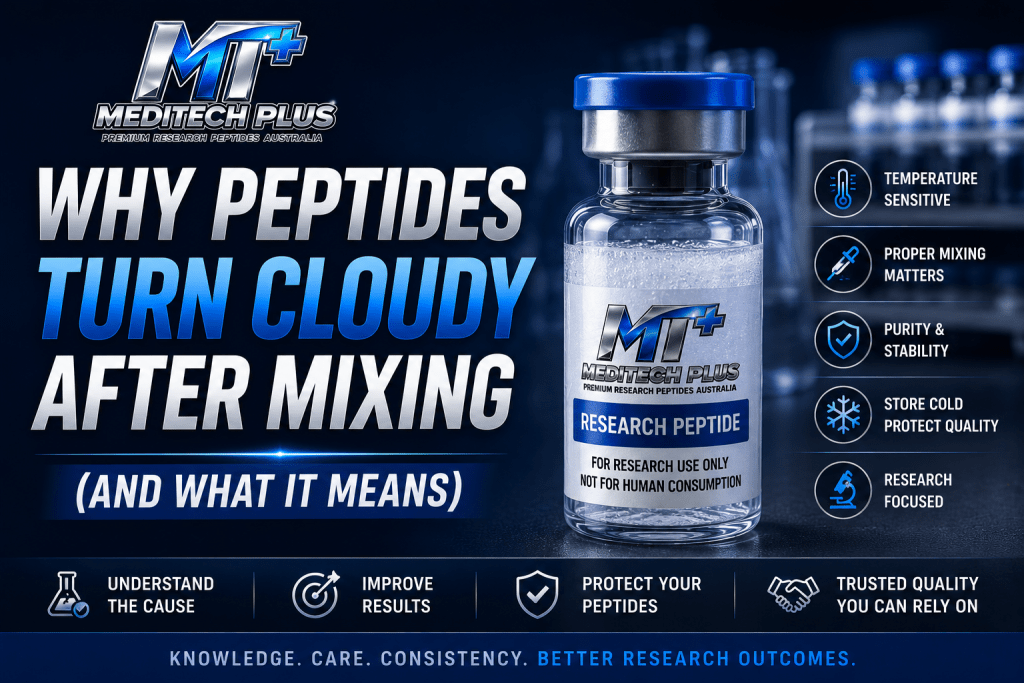
One of the most common concerns in peptide preparation is simple: Why did my peptide turn cloudy after mixing? For many people, cloudiness immediately creates panic. The first assumption is usually that the peptide is bad, damaged, or unsafe. In reality, cloudiness is often caused by handling conditions, temperature shock, pH sensitivity, or incorrect reconstitution […]
Peptide Shelf Life Explained: How Long Do Peptides Last?
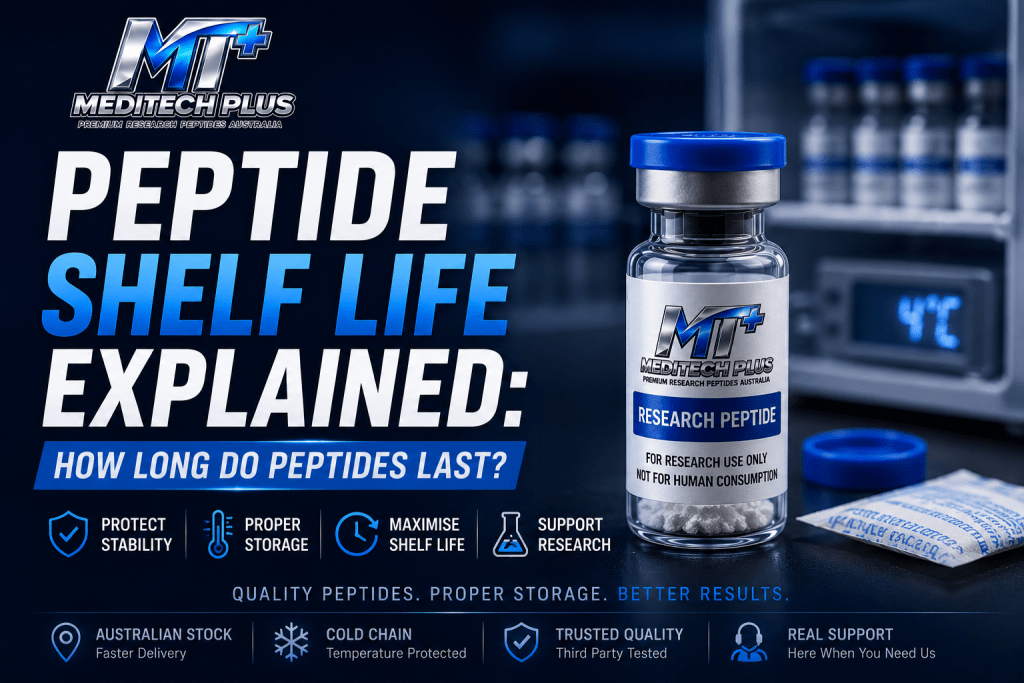
One of the most common questions in peptide research is simple: How long do peptides actually last? The answer depends on several important factors including storage conditions, whether the peptide is still lyophilised or already reconstituted, temperature exposure, handling practices, and overall stability of the compound. Many people assume peptides either last forever or go […]
Why Local Australian Peptide Stock Matters
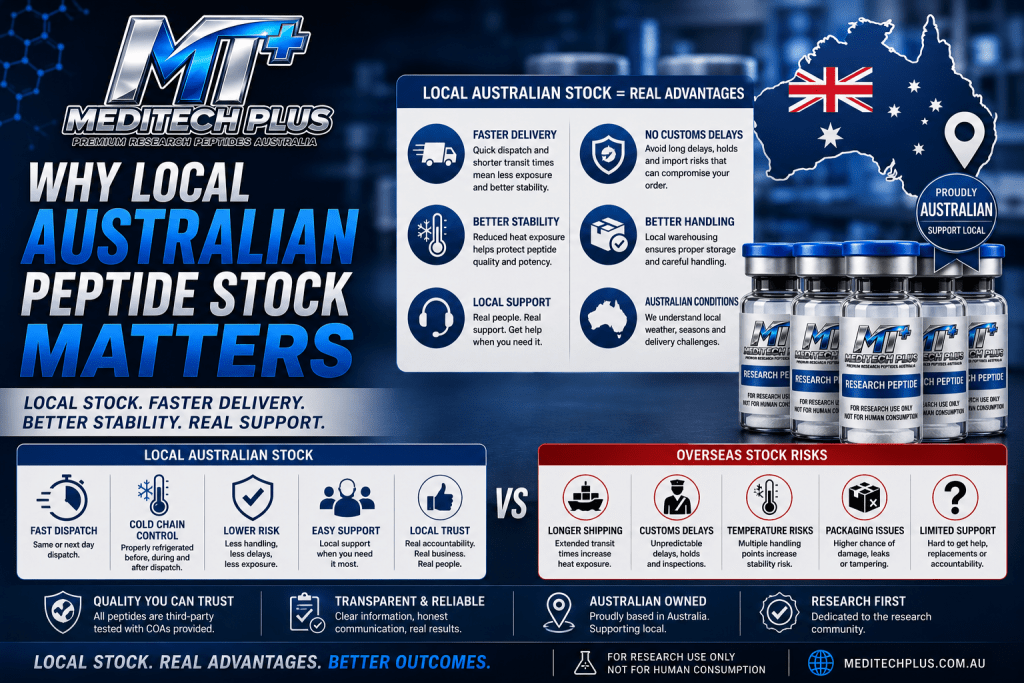
When buying research peptides, most people focus on price first. What many overlook is one of the most important factors of all — where the stock is actually located. Local Australian peptide stock offers major advantages in stability, speed, support, and overall reliability that overseas suppliers simply cannot match. Because peptides are highly sensitive compounds, […]
Complete Guide to Bacteriostatic Water for Peptides
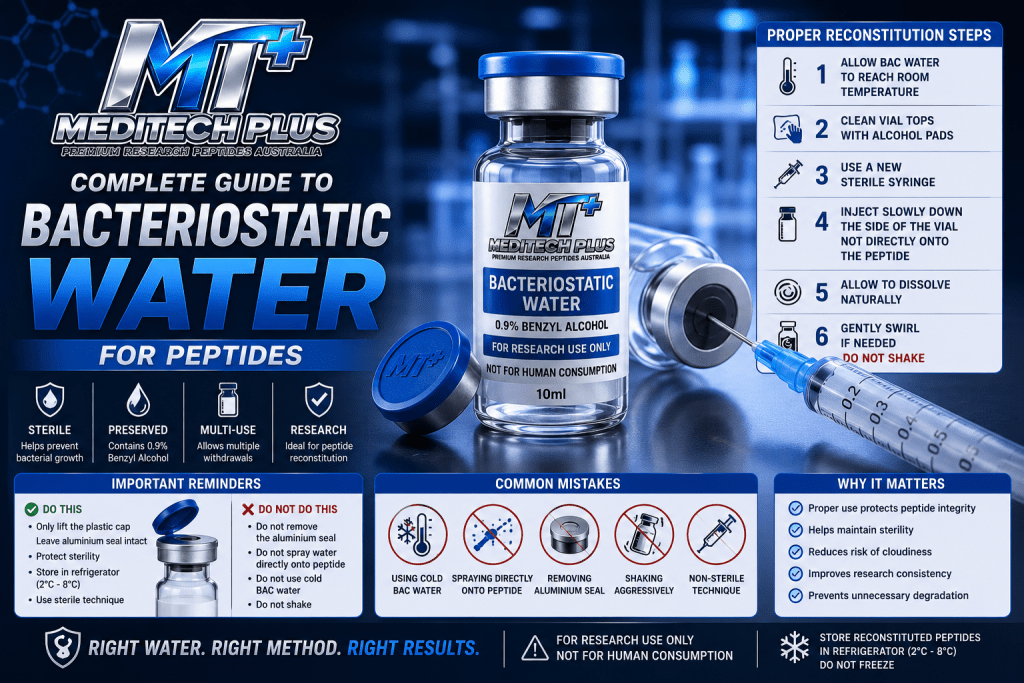
Understanding how to properly use bacteriostatic water protects peptide stability, improves consistency, and helps prevent unnecessary problems during research preparation. This guide explains what bacteriostatic water is, why it matters, how to use it correctly, and the most common mistakes people make. What Is Bacteriostatic Water? Bacteriostatic water is sterile water that contains a small […]
🧬 Peptide Storage, Preparation & Handling Guide
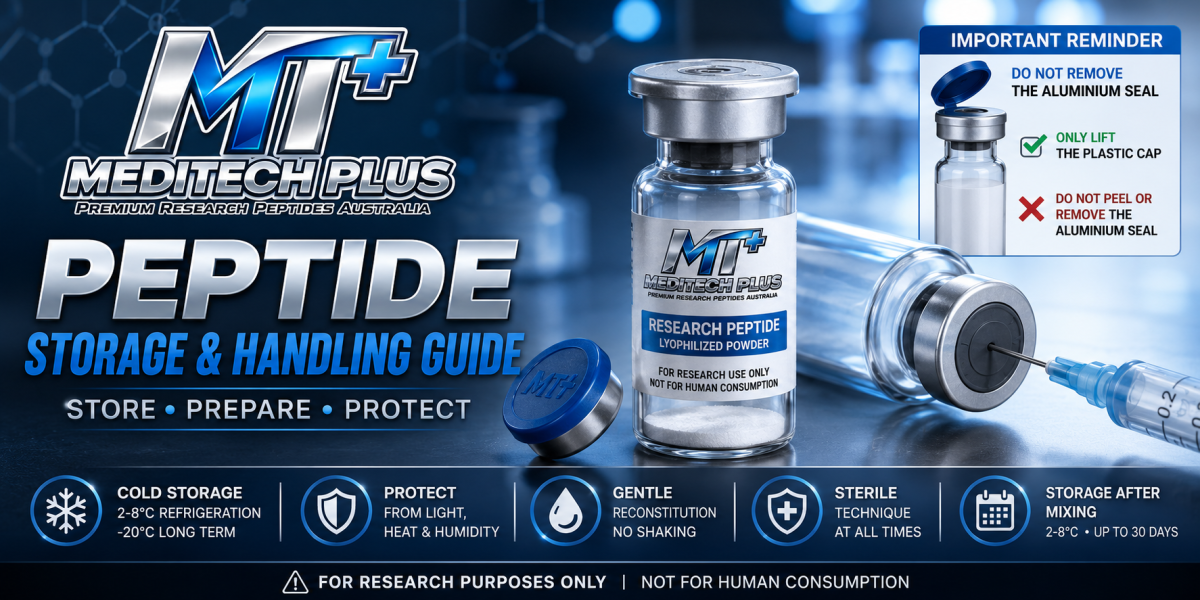
How To Properly Store, Prepare and Protect Research Peptides Peptides are extremely delicate research compounds. Their stability and molecular integrity can be affected by temperature changes, light exposure, improper mixing, contamination, poor handling, or incorrect storage. If peptides are not handled correctly, they can degrade quickly, become unstable, turn cloudy, lose structural integrity, and reduce […]